Torres del Paine National Park tours are long road days through Chilean Patagonia — granite towers on the horizon, Grey Glacier at the far end, and a 5-day W Trek for anyone who wants to walk to the base.
Torres del Paine day tours are long drives: 11 to 12 hours from Puerto Natales at $75 to $88, 16 hours from Punta Arenas or El Calafate at $106 to $207. They circle the park by road, stopping at Grey Glacier, Salto Grande and the Nordenskjöld viewpoints, and do not climb to the base of the towers. Walking to the towers is the W Trek, which takes five days.
Park entry is bought separately online at pasesparques.cl: 32,400 CLP (about $35) for a foreign adult day pass, far less for Chileans → what the entrance fee covers
Basing yourself in Puerto Natales? Guests' well-rated rooms start at $92 with breakfast → see hotels
Certified bilingual guides on every tour
Free cancellation 24 hours before
Hotel pickup from Puerto Natales & Punta Arenas
Ratings and review counts linked to their source listings
181,414 haTorres del Paine National Park area (CONAF)
$75–$1,170Price range per person
1978UNESCO Biosphere Reserve declared
2 hrsPuerto Natales to the Laguna Amarga park gate by road
1,076 Reviews — Largest Review Base
Most Popular Torres del Paine National Park Tour
Puerto Natales: Torres del Paine Full Day Tour
★★★★★★★★★★4.8(1,076 reviews)
Scenic van tour through Torres del Paine National Park from Puerto Natales, with stops at the iconic Laguna Amarga gate, Grey Lake beach, multiple mountain viewpoints, and a final stop at the Milodon Cave Natural Monument on the return.
Torres del Paine National Park Tours — All Options
from $75
Puerto Natales: Torres del Paine Full Day Tour
★★★★★★★★★★4.8(1,076 reviews)· 12 hours
Scenic van tour through Torres del Paine National Park from Puerto Natales, with stops at the iconic Laguna Amarga gate, Grey Lake beach, multiple mountain viewpoints, and a…
Puerto Natales: Full Day Torres del Paine + Milodon Cave
★★★★★★★★★★4.8(363 reviews)· 11 hours
Full-day tour of Torres del Paine National Park from Puerto Natales covering Lago Sarmiento, Nordenskjöld Lake, Pehoe Lake, Grey Lake beach, the Cuernos del Paine viewpoint, and a…
Full-day guided tour of Torres del Paine National Park departing from Punta Arenas, visiting the Milodon Cave, Grey Beach icebergs, Pehoé viewpoint, Salto Grande waterfall, and Laguna Amarga…
Five-day W Trek package covering Base Torres, French Valley, and Grey Glacier with accommodation, meals, ferry tickets, and transfers. The Base Torres day is guided; the remaining hiking…
Small-group photo safari covering the eastern wildlife side of Torres del Paine before continuing around the park's lakes, mountains, and glaciers. The listing advertises personalized photography assistance, snacks…
Full-day tour to Torres del Paine National Park departing from El Calafate, Argentina, crossing the border into Chilean Patagonia for guided stops at Lago Sarmiento, Salto Grande waterfall…
Choose a Departure City and Calculate the Real Tour Cost
Which departure city should you choose?
Puerto Natales is the practical default because it is the closest established base for Torres del Paine. Punta Arenas works when avoiding an extra hotel change matters more than the additional driving. El Calafate is a cross-border option for travellers already in Argentina; border formalities make its schedule the least predictable.
Departure
Typical tour day
Main advantage
Main trade-off
Best for
Puerto Natales
11–12 hours
Shortest road transfer and widest choice
Requires staying in or reaching Puerto Natales
Most first-time visitors
Punta Arenas
About 16 hours
Start from the main regional airport city
Very long road day with less flexibility
Tight itineraries based in Punta Arenas
El Calafate
About 16 hours
Visit from Argentine Patagonia
Two border crossings and less time inside the park
Travellers who cannot relocate to Chile
Park entry and additional costs
The displayed marketplace price is not always the final trip cost. Buy required park admission only through the official Pases Parques website, and recheck the tour listing immediately before payment because inclusions and prices can change.
Tour format
Costs to verify before booking
What the checked listing says
Puerto Natales day tours
Torres del Paine admission; Milodon Cave admission; meals
Featured listings say park and cave tickets are separate; food is not included
Punta Arenas day tour
Park admission; Milodon Cave admission; meals
Admission tickets are separate from the advertised tour price
W Trek Express
Park admission and personal trekking expenses
Accommodation, specified meals, ferry transport and transfers are included; park entry is separate
Photo safari
Park admission and any item not explicitly named
Lunch and snacks are advertised; confirm admission and the live cancellation terms
El Calafate day tour
Park admission and any border-related requirements
Boxed lunch is included; park entry is paid separately
How we compare and order tours
This is an independent affiliate comparison, not a local tour operator or booking platform. A commission may be earned when a reader books through a link, at no extra cost to the reader. Commission does not determine the order.
Itinerary usefulness: meaningful park stops rather than the longest attraction list
Departure convenience: total day length, pickup area and border or transfer complexity
Evidence quality: rating volume matters alongside the rating itself
Group format: published participant cap and how much guide access it allows
Price clarity: admission, meals, ferries and other exclusions are stated separately
Traveller fit: day sightseeing, trekking and photography tours are not treated as interchangeable
Torres del Paine National Park — In Numbers
1959Year Torres del Paine National Park was established in Chilean Patagonia
181,414 haProtected area of Torres del Paine, the figure CONAF publishes
1978Year UNESCO declared Torres del Paine a Biosphere Reserve
176 km²Area burned in the 2011-2012 fire, after which open fires were banned
2,884 mCerro Paine Grande, the park's highest peak, measured by GPS in 2011
400+Plant species recorded in Torres del Paine's ecosystems
Torres del Paine National Park — Complete Visitor Guide for Chile & Patagonia
The Granite Towers — Discover the Beauty of Torres del Paine
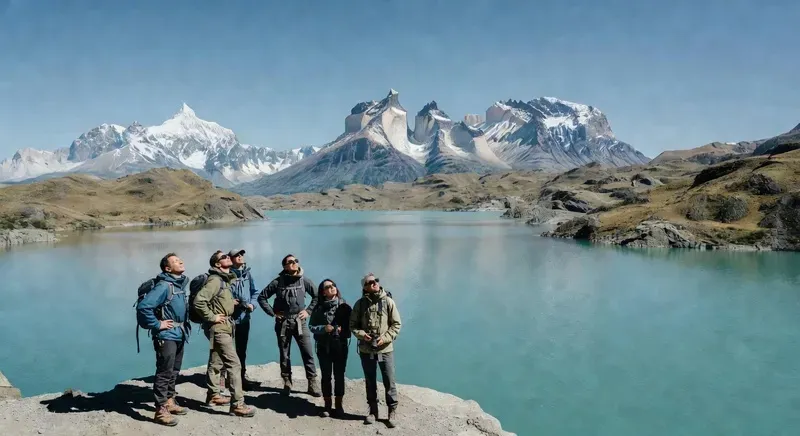
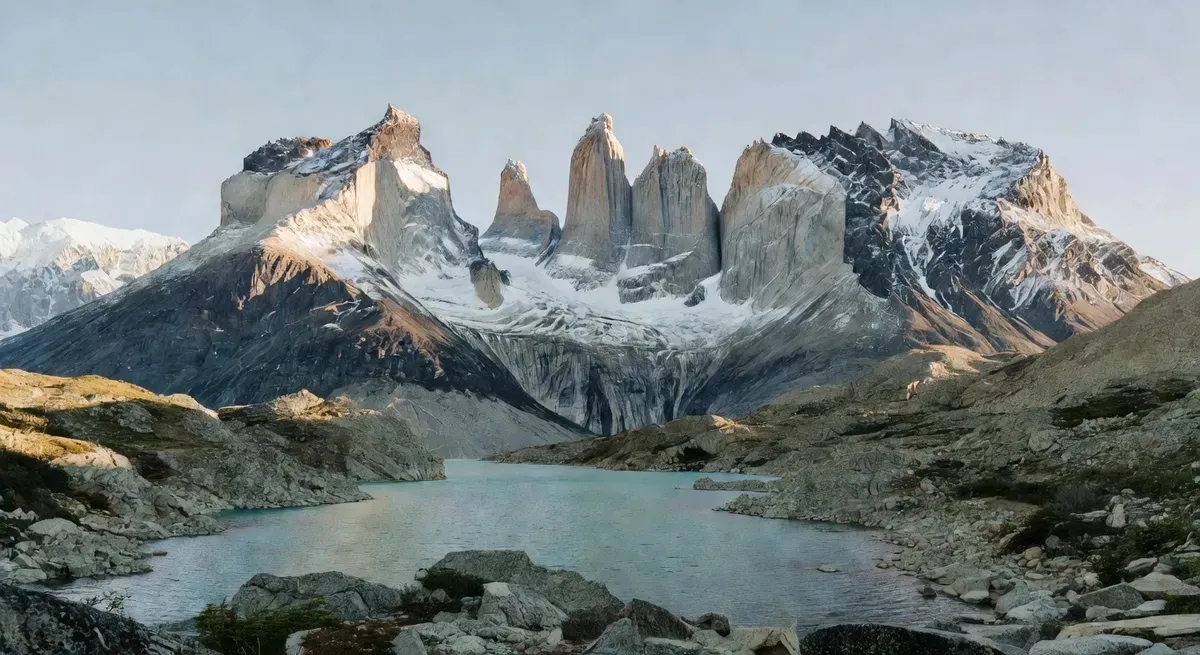
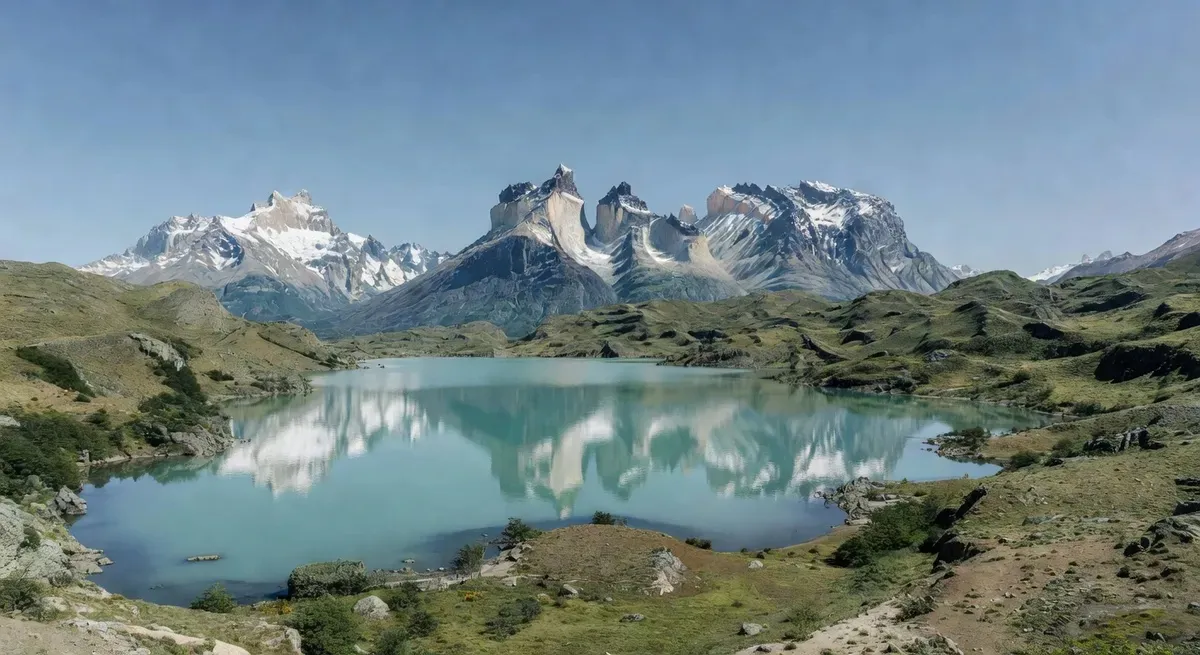
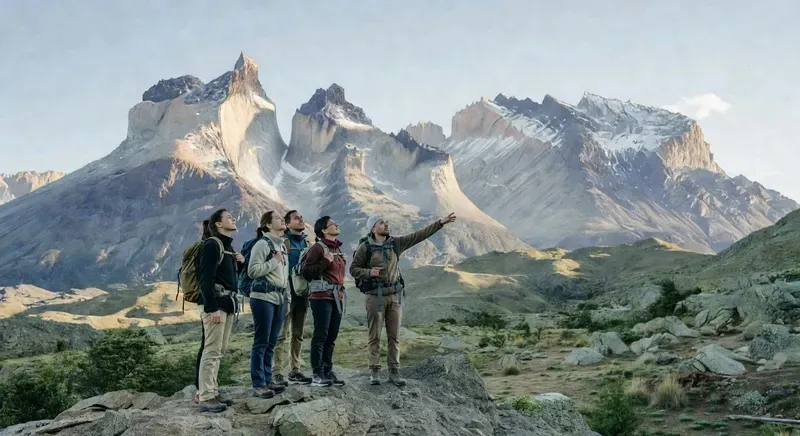
The three granite towers that give Torres del Paine National Park its name are the defining image of Chilean Patagonia — and the best of patagonia's national parks in South America. Rising 2,500 metres above sea level, the towers — Sur, Central, and Norte — are the eroded remnants of an igneous rock intrusion lifted through the earth's crust and sculpted by glaciers over millions of years. The best viewpoint is the Base Torres mirador (also called Torres Base), reached via a 4–5 hour hike from Laguna Amarga. At the trail's end, a glacial lake sits beneath the towers, its turquoise surface reflecting sheer vertical faces of granite. The views of the Paine from every angle are among the most majestic in South America.
Day tour visitors typically see the towers from the park entrance at Laguna Amarga — a spectacular panoramic view that requires no trek and is part of every full-day group tour itinerary. The towers glow amber at sunrise and shift throughout the day as clouds roll across the Patagonian sky. Serious trekkers hike the W Trek in Torres del Paine (4–5 days) or the O Circuit (8–10 days) to experience the best of Torres del Paine from multiple angles, sleeping in mountain refugios along the route. The Nordenskjold Lake viewpoint — visible from the day hike trail above Salto Grande — frames the Paine massif behind an expanse of turquoise water for stunning views. Discover Torres del Paine tours and discover the beauty of Torres through guided and self-guided options for every fitness level.
Grey Glacier and Glacial Lakes — Patagonia's Pristine Ice Field
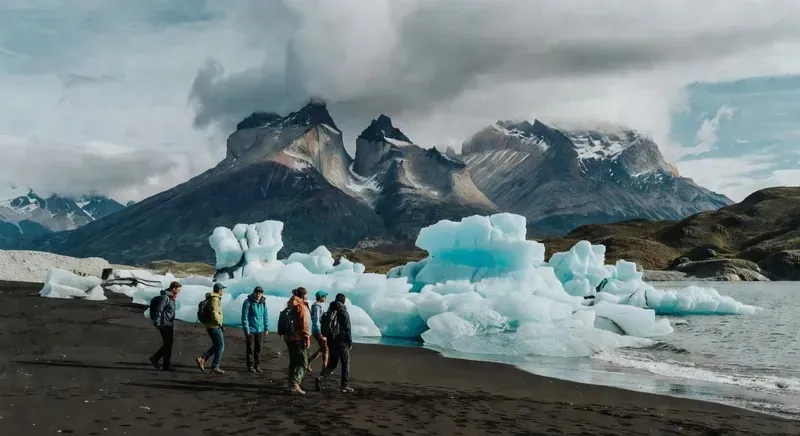
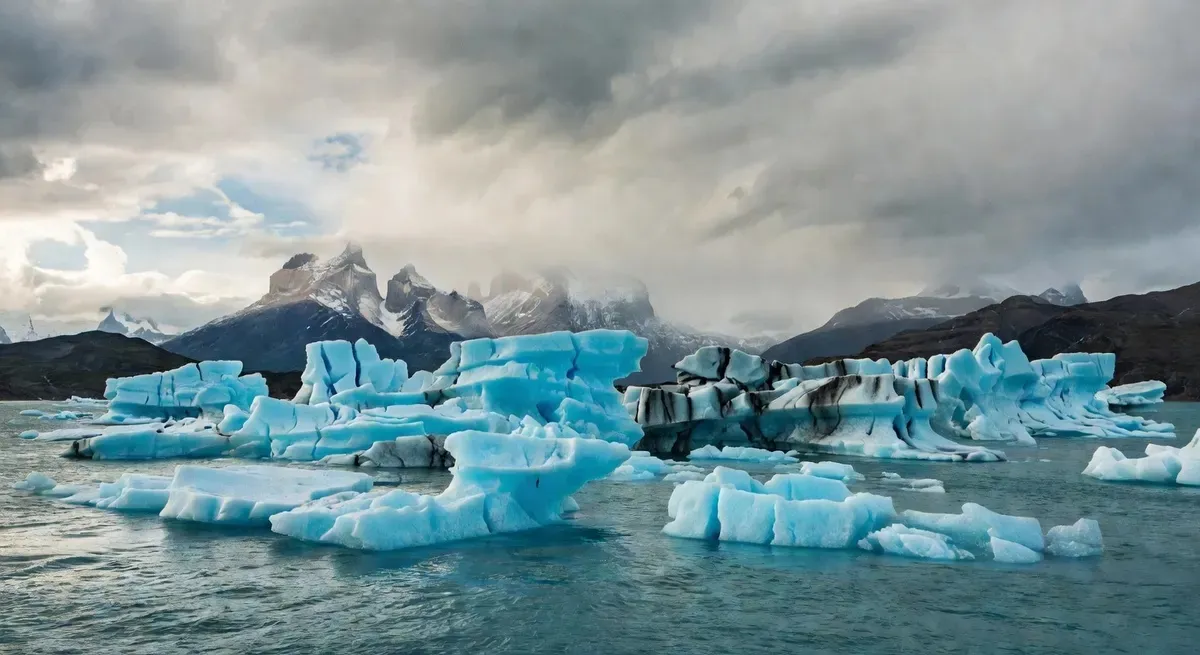
Grey Glacier is the most accessible ice tongue of the Southern Patagonian Ice Field — the third-largest freshwater reserve on earth after Antarctica and Greenland. The glacier descends from the Campo de Hielo Sur ice cap into Lago Grey, one of the most spectacular glacial lakes in Chilean Patagonia, breaking off massive icebergs that drift across the lake's steel-blue surface before washing up on Grey Beach. On day tours, visitors walk the Grey Lake beach trail (1 hour return) and see icebergs up close — some the size of houses, glowing vivid turquoise and white against the dark Patagonian sky.
For a closer encounter, catamaran boat trips depart from Puerto Natales and navigate directly to the glacier's face. The W Trek Express tour includes a catamaran crossing of Lago Grey on day 4, sailing within metres of the glacial wall where ice cracks and calves into the water with a thunderous crash. This is a genuine torres del paine adventure — an unforgettable experience that no photograph fully captures. The glacier has retreated significantly in recent decades — a striking visual marker of Patagonia's changing climate and one of the most discussed topics on any guided group tour of the park.
The French Valley — Day Hikes and Trekking in Chilean Patagonia
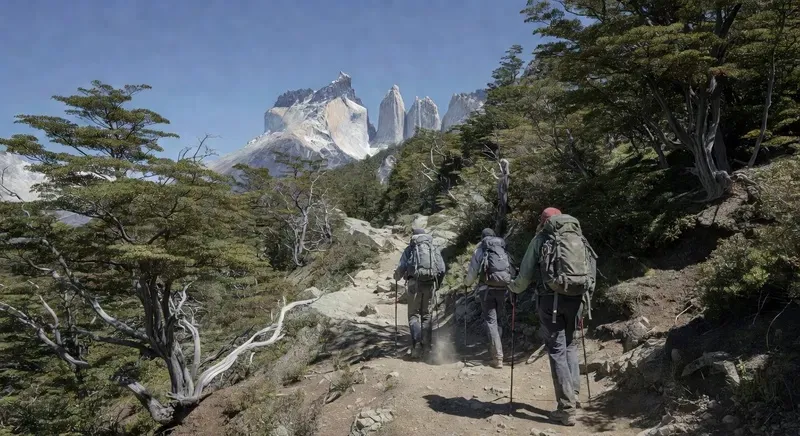
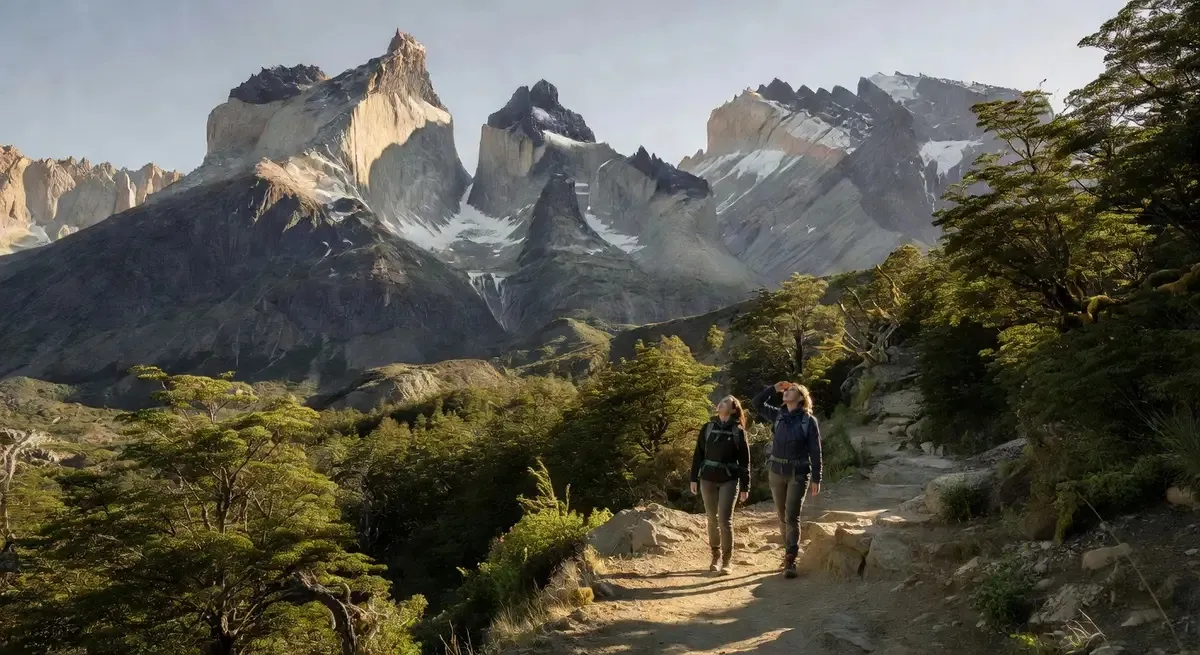
Valle del Francés (French Valley) is the hidden centrepiece of the W Trek in Torres del Paine and one of the best day hikes in all of Patagonia. Reached by boat from Pudeto and a half-day trek in Torres del Paine through ancient lenga beech forest, the valley is a natural amphitheatre enclosed by the vertical walls of the Paine Massif — Cuernos del Paine, Paine Grande, and Aleta de Tiburón — with hanging glaciers clinging to the upper cliffs and a constant soundtrack of ice avalanches echoing across the valley floor. The Mirador Británico viewpoint offers stunning views on three sides of granite and ice.
On the W Trek Express, the French Valley hike is day 3. The trail gains 600 metres in elevation through a forested lower section before opening into the bare glacial valley. Wildlife sightings on this route include Andean condors riding thermals above the cliff faces, guanacos (Patagonia's wild camelid) grazing the valley terraces, and the elusive puma tracking prey along the forest edge. Expert guides know this valley's rhythms intimately — the W Trek Express small group format (max 4 participants) means the pace matches your fitness. This patagonia adventure through Chilean Patagonia is genuinely unforgettable for serious trekkers.
Milodon Cave — Patagonia's Prehistoric Secret
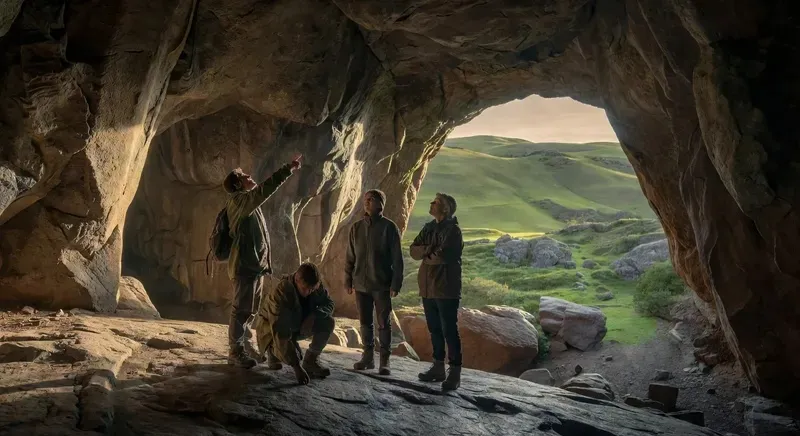
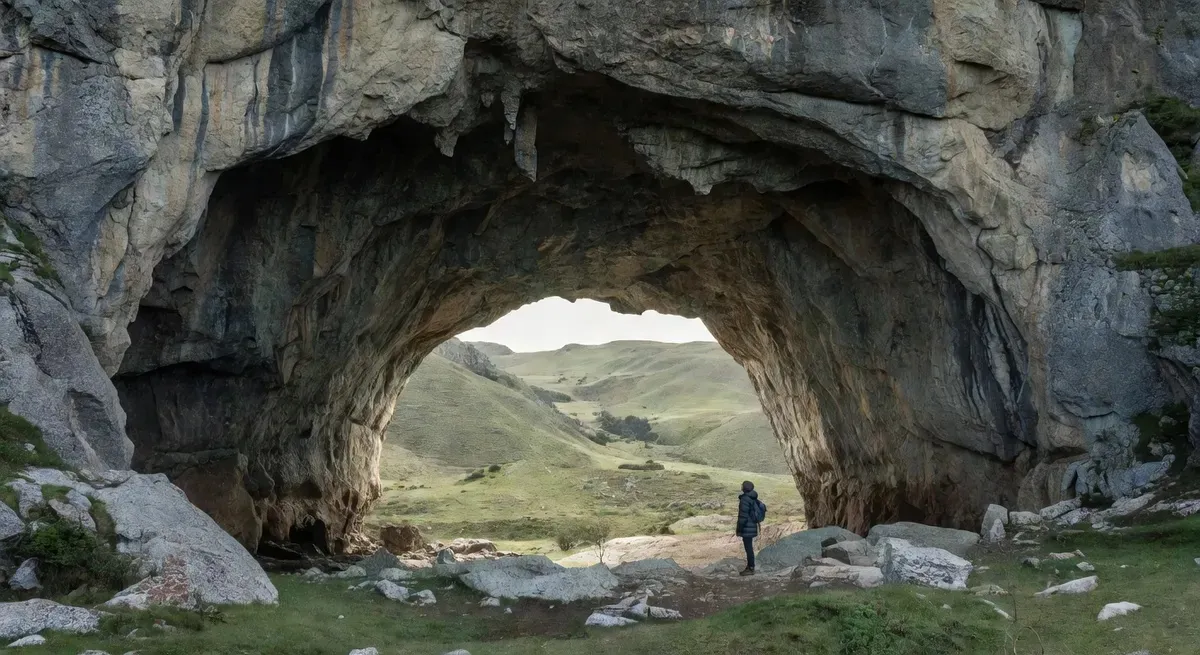
The Cueva del Milodón Natural Monument is a natural cave system 24 kilometres north of Puerto Natales, discovered in 1895 by German explorer Herman Eberhard who found the preserved skin, bones, and dung of a Mylodon darwinii — a giant ground sloth that roamed Patagonia alongside early humans 10,000 years ago. The cave is 200 metres long, 80 metres wide, and 30 metres tall at its entrance — large enough to shelter Patagonian livestock in its original use as a sheep ranching outbuilding before its scientific significance was recognised.
Almost every full-day Torres del Paine tour from Puerto Natales stops at the Milodon Cave on the return journey. A life-size fiberglass mylodon stands at the entrance for photos, and an interpretive trail explains the cave's prehistory, the indigenous Tehuelche people who used it as a seasonal shelter, and the paleontological discoveries made here that helped establish the timeline of human migration through South America. The cave charges its own admission, bought separately through pasesparques.cl, and it is generally not included in tour prices. Check your tour inclusions before booking.
Wildlife, Flora and Fauna of Torres del Paine — What to Expect
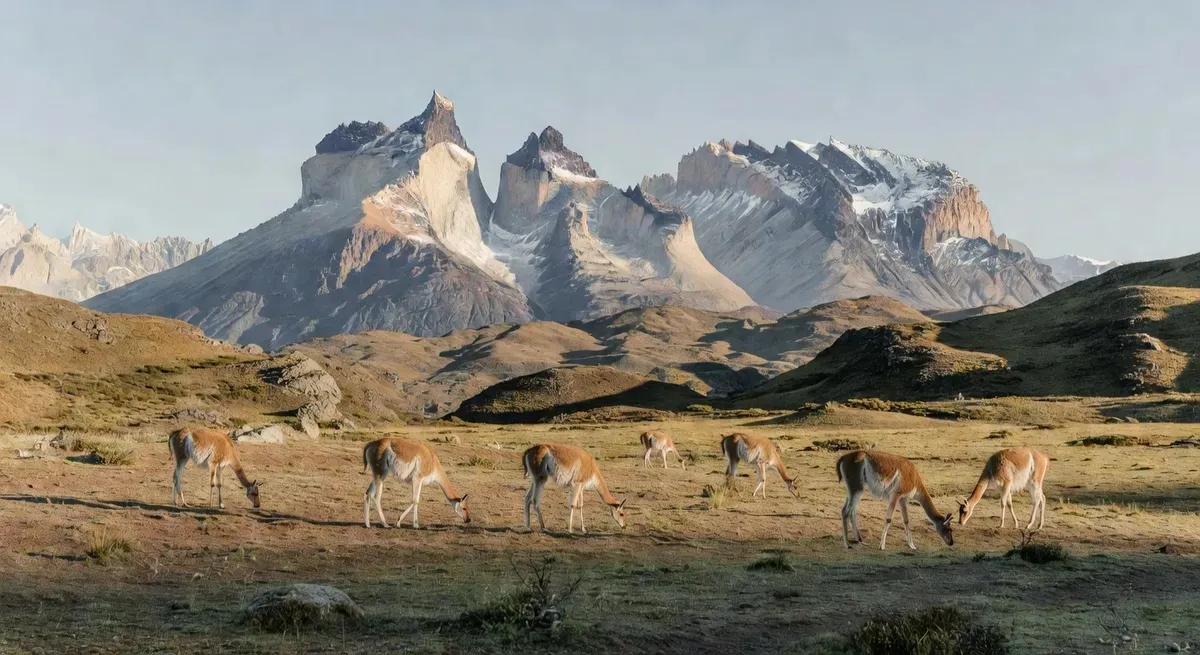
Torres del Paine supports pumas, guanacos, endangered huemul deer, Patagonian foxes and many bird species. Guanacos are commonly seen along park roads, while puma sightings remain unpredictable and are never guaranteed.
Andean condors, Chilean flamingos, rheas and black-necked swans may be seen in the park's different habitats. The photo safari listing focuses on the eastern wildlife zone and photography assistance, but currently has too few verified reviews to establish a typical sighting rate.
Best Time to Visit Torres del Paine — Entry Fees and National Parks Itinerary
Best time to visit Torres del Paine and plan your itinerary: October to April (austral spring and summer) is peak season. This is the best time to visit Torres del Paine for day tours — long light evenings in December and January, milder temperatures, and full trail access. Time to visit Torres del Paine for the W Trek is November to March; refugios and ferries are fully operational. May to September brings fewer crowds but harsher weather.
Park tickets are sold only through pasesparques.cl, the official CONAF portal. A foreign adult pays 32,400 CLP (about $35) for a day pass and 48,500 CLP (about $53) for a multi-day pass, converted at 914 CLP to the dollar on 16 August 2026. Chilean nationals and residents pay far less, and children under 12 enter free. Buy in advance and arrive with the QR code, because the gates do not take cash. Guided tours do not include park entry, so treat the fee as an add-on to every advertised price. Full breakdown in our Torres del Paine entrance fee guide. Last verified: August 2026.
Paradigmatically, the time to visit Torres del Paine aligns with your interests: day hikers and group tour visitors thrive in November–February; W Trek and O Circuit trekkers have most flexibility in November–March; birdwatchers and wildlife photographers often find the best of patagonia's wildlife in the shoulder months of October and April when animals are less disturbed. Weather across Chile and Patagonia remains unpredictable year-round — pack layers regardless of season.
Accommodation in Patagonian Chilean Patagonia — Lodges, Estancias, Best of Patagonia Group Tours
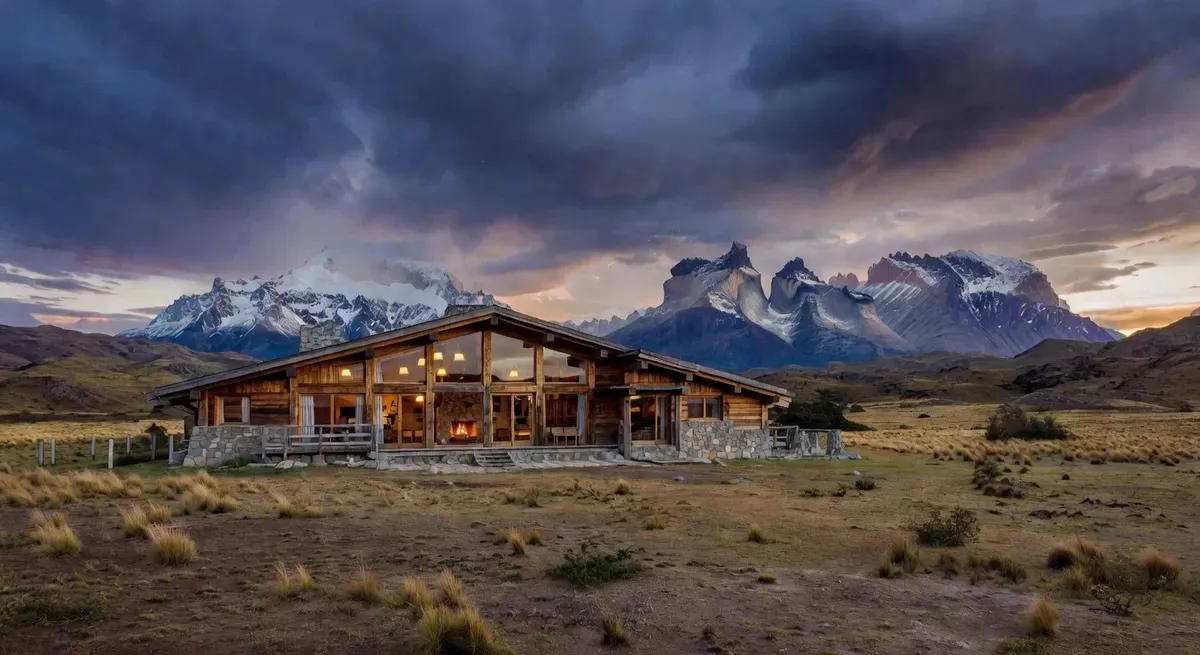
Puerto Natales is the gateway to Torres del Paine and the base for most guided tours. Accommodation ranges from budget hostel dorms to luxury estancias and boutique wilderness lodges inside the park boundary. The park's iconic estancia hotels — Explora Patagonia, Las Torres, and Hotel Lago Grey — sit directly on the park perimeter and offer multi-day programmes with guided day hikes from the door.
For those on a standard day tour itinerary from Puerto Natales, most accommodation clusters on Avenida Bories and around the town centre, 15 minutes from the main bus terminals. Estancias outside the park — traditional Patagonian sheep-farming ranches now offering guesthouse accommodation — provide an atmospheric alternative and typically include meals prepared with local lamb, served by gauchos and estancia staff. An estancia stay adds a dimension to Chilean Patagonia that no day tour covers.
For the W Trek Express (5 days), accommodation is bundled: Garden Domes dome lodge (2 nights in Puerto Natales), Laguna Amarga Tiny House (1 night, base of towers), and Paine Grande camping (1 night on the Grey Glacier route). All bedding and equipment provided at each stop.
Getting to Torres del Paine — Patagonia Adventure from Santiago, El Calafate and Atacama
From Santiago, fly to Punta Arenas and continue by road to Puerto Natales, or use the Punta Arenas departure if your schedule cannot accommodate another base. Direct Santiago–Puerto Natales flights operate seasonally.
From El Calafate, regular buses connect to Puerto Natales. The alternative El Calafate day tour is a 16-hour cross-border day with substantially more driving and less time inside the park.
San Pedro de Atacama belongs on a separate leg of a Chile itinerary. Do not treat it as a practical departure point for Torres del Paine.
Which Torres del Paine Tour Is Right for You?
🕑One day from Puerto NatalesIf you have one day in Puerto Natales, the most-reviewed full-day tour covers Laguna Amarga, Grey Lake and Milodon Cave in a 12-hour loop.
📷Photography focusChoose the photo safari for a photography-led small-group itinerary. Its listing currently has very limited review evidence.
🥾Multi-day trekkingThe W Trek Express covers Base Torres, French Valley and Grey Glacier in five days. Only the first trekking day is guided.
📍Flying via Punta ArenasThe Punta Arenas departure avoids relocating to Puerto Natales, but the full day lasts about 16 hours.
What Verified Reviews Reveal Before You Choose
Across 1,076 reviews, travelers repeatedly praise the guides, organization, comfortable transport and time allowed at viewpoints. Weather can obscure the mountains, so guide flexibility matters.
Reviews of the Punta Arenas departure emphasize knowledgeable bilingual guides and many scenic stops. The consistent trade-off is the very long 16-hour day.
W Trek package reviews value the handled logistics, accommodation and meals. The operator rates the trek hard, and only the first trekking day includes a guide.
The photo safari currently has only one verified rating on its listing. That is too little evidence for a reliable review pattern, so judge it by the itinerary, group cap and live operator details.
Why Book a Guided Torres del Paine National Park Tour
Skip the Logistics
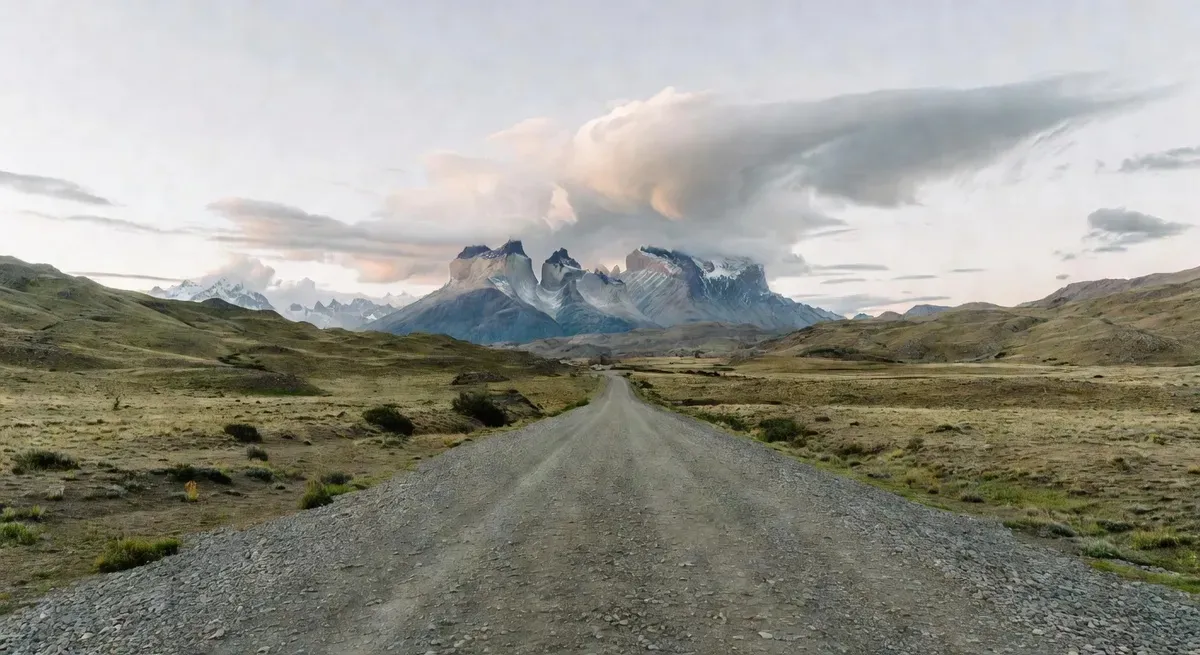
Getting to Torres del Paine involves 2-hour drives on unpaved roads, advance park entry bookings, and ferry tickets for trekking routes. Guided tours handle every detail — pickup, entry fees (check inclusions), transfers, and drop-off.
Expert Local Knowledge
A guide can explain the landscape, manage the day's route and adapt viewpoint stops to conditions. Wildlife sightings remain unpredictable, and no guide or tour can guarantee a puma encounter.
Free Cancellation
Patagonian weather is notoriously unpredictable. All tours listed here include free cancellation up to 24 hours before departure — so you can book in advance, monitor the forecast, and adjust plans without penalty.
Flexible Departure Points
Tours depart from Puerto Natales (the closest base), Punta Arenas (the main airport hub), and El Calafate (Argentina). Choose the option that fits your itinerary — no unnecessary repositioning required.
Park Entry Handled Separately
Admission is bought online at pasesparques.cl and shown as a QR code at the gate, so nobody is stuck at a barrier without cash. A foreign adult day pass is 32,400 CLP (about $35), and our entrance fee guide sets out every category.
Wind Is Planned For, Not Ignored
Gusts in the park reach around 110 km/h and peak in December, January and February. Guides adjust the route to the day rather than pretending the forecast is a promise, which is also why we tell you what to pack before you arrive.
Where to Stay in Puerto Natales
Every day tour on this page leaves Puerto Natales before dawn, so a bed in town is what makes the 12-hour park day workable.
Hotel Big Sur
8.8/10
Puerto Natales · in town · 165 Expedia reviews
The cheapest of these three on the night we checked, at $92
Rated 8.8/10 across 165 Expedia reviews
Breakfast included, and listed as fully refundable
We have not stayed at these hotels. Guest scores, review counts and nightly rates are what Expedia listed for a midweek night in September 2026, checked on 1 August 2026, and Patagonian rates rise sharply in December and January.
Two of these are the road day this page sells; the third is the five-day walk it does not, so you can see the difference before you book.
Full-day Torres del Paine tour: what you really get
A minute-by-minute review of the standard Puerto Natales day tour, stops and driving time included.
Video: Zoe Wanders
Day trip to Torres del Paine National Park
The classic circuit by road: Grey Glacier, Salto Grande and the lake viewpoints in one long day.
Video: Samuel and Audrey
Hiking the W Trek — an honest account
What the five-day walk to the base of the towers demands, from a couple who filmed the hard parts too.
Video: Dayne & Jo
Videos load from YouTube only when you press play.
Torres del Paine National Park Tours — Frequently Asked Questions
Do I need to book Torres del Paine National Park entry in advance?
Yes. Park entry tickets are bought online in advance at Pases Parques and presented at the gate as a QR code; cash is not accepted there. A foreign adult day pass is 32,400 CLP (about $35). Fees and rules can change, so confirm the current amount on the official ticket site, and read what the entrance fee covers before you buy. The GetYourGuide listings checked on July 24, 2026 state that the park and Milodon Cave tickets are not included in the featured Puerto Natales day tours.
What is the best time of year to visit Torres del Paine National Park?
October to April (austral spring and summer) is the best time to visit Torres del Paine National Park. December and January bring the longest light and the warmest temperatures, and also the strongest wind. See the month-by-month breakdown in our guide to the best time to visit Torres del Paine. Book tours at least 2 weeks ahead during peak season. May to September sees harsher weather and reduced services, but fewer crowds. The full-day tour from Puerto Natales is the most popular option during peak season and departs daily.
How do I get from Punta Arenas to Torres del Paine National Park?
Punta Arenas is the main year-round airport gateway. Puerto Natales is 248 km up the road, about 3 hours 15 minutes by bus, and the park gate is a further 2 hours; a direct day tour from Punta Arenas is about 16 hours door to door. Every leg is laid out in how to get to Torres del Paine. Read the Punta Arenas departure guide before deciding whether avoiding a night in Puerto Natales is worth the long day.
Is the W Trek suitable for beginners?
The operator rates the W Trek Express hard. Base Torres is an 18 km day, and only that first trekking day is guided; French Valley and Grey Glacier are independent hikes. See the five-day W Trek itinerary for the exact support included.
What should I pack for a Torres del Paine National Park day tour?
Pack layers: a waterproof jacket, fleece mid-layer, thermal base layer, and warm hat and gloves even in summer — Patagonian weather can produce all four seasons in one day. Bring waterproof hiking shoes or boots, sunscreen and sunglasses (UV is intense), a camera, water, and snacks. Comfortable walking shoes are the minimum for viewpoint stops; hiking boots are recommended if trails are included. Drones are not permitted anywhere in the national park. Our full Torres del Paine packing list splits the day-tour kit from the multi-day trek kit.
Can I see a puma on a Torres del Paine day tour?
Puma sightings are possible but never guaranteed. The photo safari focuses on the eastern wildlife zone, while standard day tours may stop for wildlife seen from the road. Do not choose any tour on the assumption that a puma will be seen.
Are Torres del Paine tours available from El Calafate, Argentina?
Yes. There are full-day tours to Torres del Paine that depart from El Calafate, Argentina. The journey runs about 7 hours each way, crossing at Cancha Carrera into Cerro Castillo, so time inside the park is shorter than on departures from Puerto Natales. They are a practical option for travellers based in El Calafate who want to visit the park without relocating to Chile. The El Calafate to Torres del Paine day trip guide explains the border crossing, timeline, and what you can realistically see in one day.
Where should I stay for Torres del Paine tours?
Puerto Natales is the base: the park entrance is a two-hour drive away and every day tour here collects you from a hotel in town. Expedia guests rate the town's hotels and guesthouses well, with rooms from around $92 a night including breakfast, while lodges inside Torres del Paine cost several times that and suit multi-day treks rather than day tours. See three of the best-reviewed town options in where to stay in Puerto Natales.
Is one day enough for Torres del Paine National Park?
One day gets you the road circuit: the towers from a distance at Laguna Amarga, the Cuernos above Lago Nordenskjöld, Salto Grande and the icebergs on Lago Grey. It does not reach the base of the towers, which is a full day on foot in its own right. Our guide to Torres del Paine in one day sets out what fits and what does not, and the full-day tour from Puerto Natales at $75 is the version of that day with the least driving.
How windy does Torres del Paine get?
Wind is the defining feature of the park, not the rain. It runs from a steady 20 km/h breeze to gusts around 110 km/h, averaging near 60 km/h on a windy day, and it is strongest in the austral summer months of December, January and February rather than in winter. Plan for it in your packing list and check the month-by-month picture in best time to visit Torres del Paine.
Ready to explore Torres del Paine National Park? Book with free cancellation.
 from $75